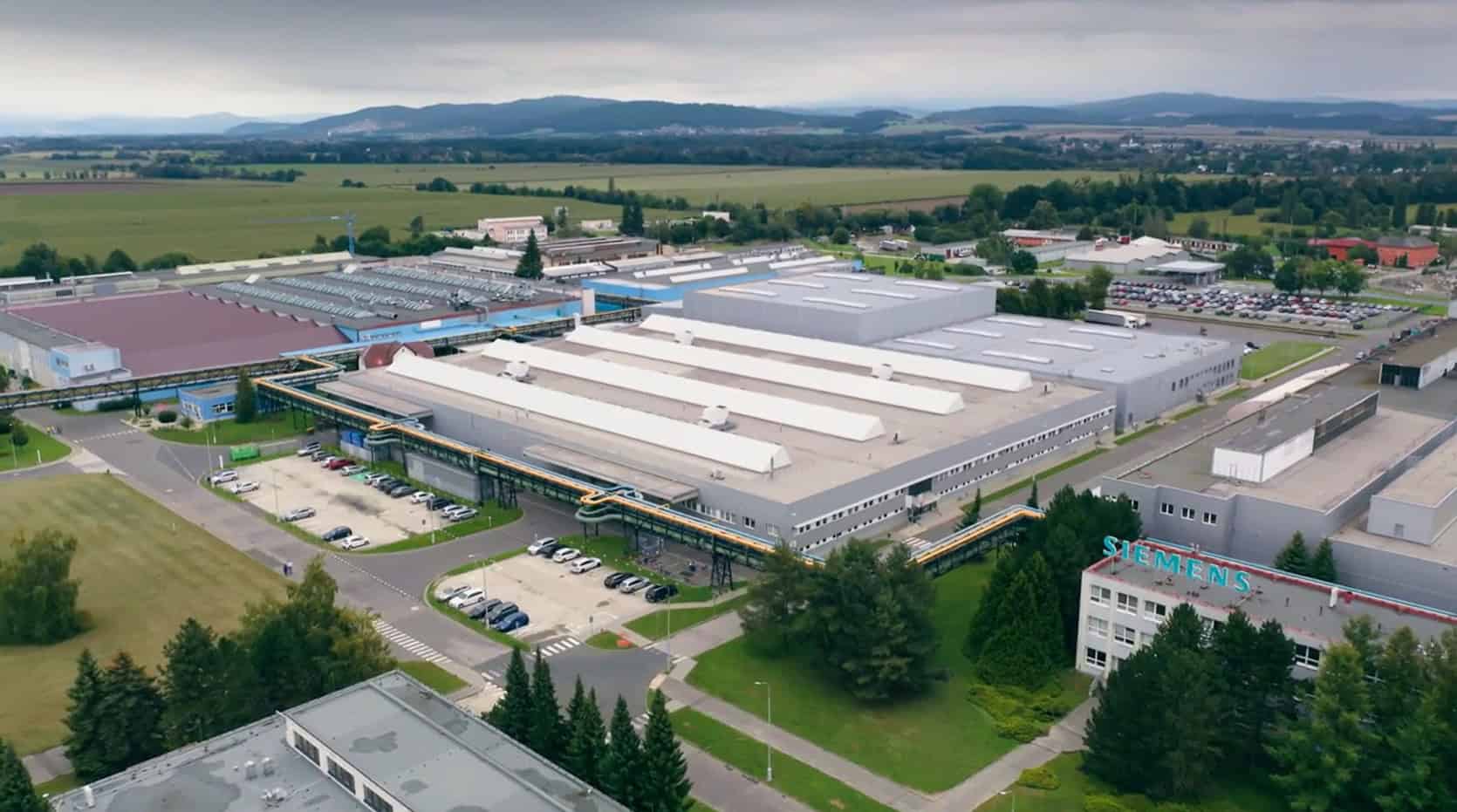
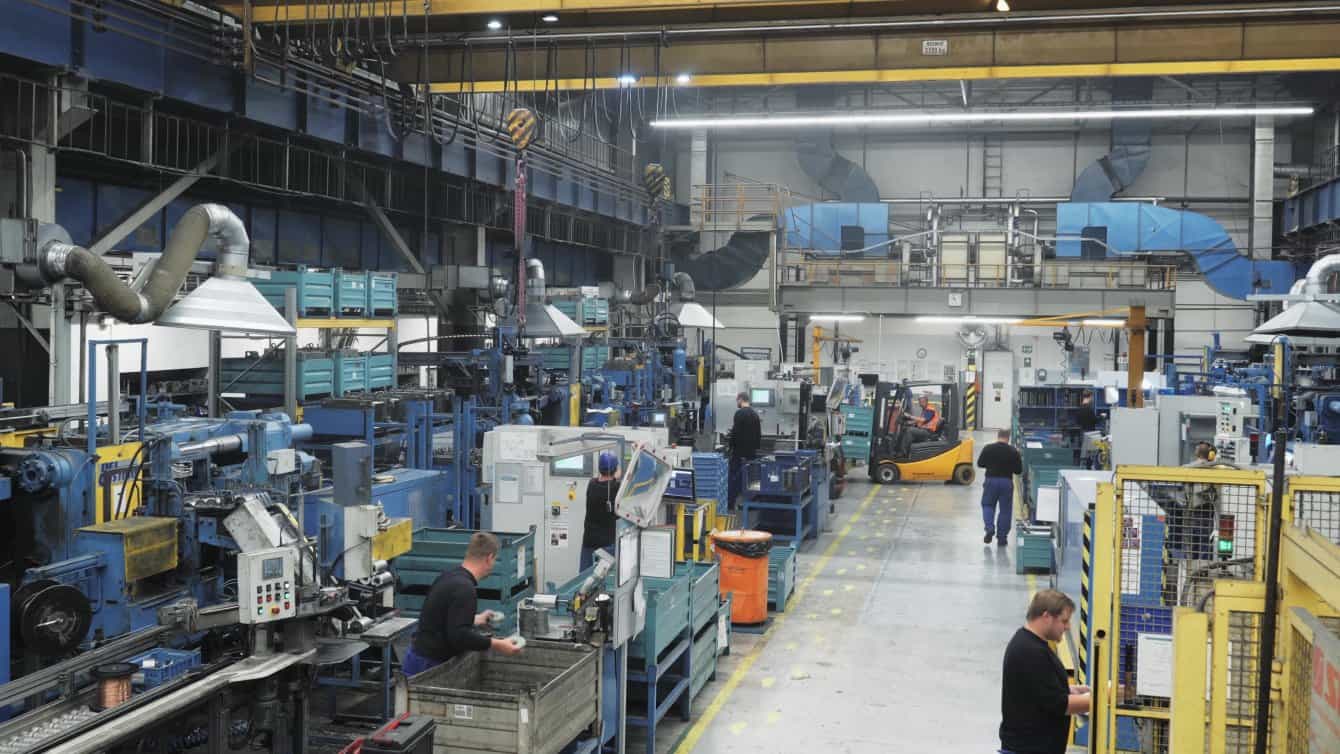
The Siemens brand is known for its innovative approach and vision of providing solutions to current challenges. It applies this philosophy when selecting suppliers and implementing technologies in its plants. At its Mohelnice plant, Siemens launched a pilot project to monitor forklift trucks with GX Solutions – 50 trucks, half of the fleet, were equipped with a system monitoring efficiency, load, driver, movement, speed, and impacts. The results? A reduction in heavy impacts by more than 50%, a 14% increase in efficiency, and a 15% saving in maintenance costs thanks to a reduction in the fleet.
Evaluation of the application of the truck tracking system
- 6% reduction in handling equipment
- Reduction of strong impacts by more than 50% compared to the first month of operation
- 14% increase in truck operating efficiency
- 15% reduction in maintenance costs
- Return on investment in monitoring within 10 months
Our first question was naturally directed at Miroslav Lamač, head of the supply and storage department…
How did you come up with the idea of equipping handling equipment with monitoring units?
Several years ago, I had the opportunity to visit a modern port logistics center in Hamburg that used a GPS-based system to monitor the movement of handling equipment. Our colleagues introduced us to a system that, in many ways, seemed like the technology of the future. At the time, it was an interesting inspiration, but technically and economically unfeasible for use in our production halls. Time passed and technology improved to such an extent that GPS is now the ideal choice for our needs for flawless display of truck movements.
So the system allows you to accurately locate handling equipment and optimize its operating mode?
Positioning and recording is only a basic output in our conditions. The entire system allows you to monitor time, distance, compliance with a defined movement area, and speed. With additional equipment, it is possible to monitor shocks and impacts, restrict movement after an impact of a certain intensity – all of this specifically through the logged-in user, i.e., the forklift driver. Of course, we can process all the partial information into various outputs and analyses and thus obtain data for more efficient use of the trucks. This not only allows us to reduce the number of machines and save money, but also to change their capacities or replace one type of machine with another, thereby improving working conditions for operators. The preventive role in the area of occupational safety and fire protection is also important, where we expect a decrease in damage caused by forklift operation, both to equipment and materials. Analyses from maps will help us optimize transport routes and not only speed up the transport of materials, but in many cases also reduce traffic at exposed intersections. We have decided to implement a system that seemed like an unattainable dream of the future not so long ago. However, our work is far from over; the most important part is still ahead of us—we must responsibly use the system’s outputs to further improve our processes.
How does the whole system work in everyday practice?
That’s a question for project manager Martin Rost. In practice, it works like this: any of the 35 people, mainly foremen and industrial engineers, who have access to the server where data is continuously stored, can map the current status of the handling equipment in a matter of moments. The condition is that forklift drivers log in to the remote server with their ID card before driving, so we immediately get info on who is driving the forklift and where, but also, for example, whether the forklift is being used efficiently. The current positions of the forklifts on the floor are marked with pictograms. Each pictogram is actually an electronic logbook. The individual icons represent forklifts. A yellow frame means that they have weight “on the forks.” When I select a specific forklift, I can immediately see that it is being driven by, for example, Jana Malá, who is currently carrying a load weighing one kilogram on the forks, is traveling at a speed of six kilometers per hour, and has just hit an obstacle with the forklift. The driving history also shows that this truck is most often used for loading and unloading trucks, that today it passed twice through the winch room, passed the impregnation area, and stopped at the assembly of large axle heights. Summary information about the truck also shows that three other drivers drove it today – one for three hours and the others for a few minutes. In total, it was switched on for ten hours, five of which it was in use. And that the second driver in line hit something while driving through the press shop. The heaviest weight it carried today was 1,200 kilograms. Operational efficiency ranges
Introducing new technologies into established processes is usually met with considerable resistance from employees. How did you manage to deal with this problem?
Siemens has always strived to use the latest technologies to improve its processes, so the implementation of a system for monitoring the operating parameters of handling equipment comes as no surprise. What’s more, this technology brings measurable improvements in the safety and efficiency of the handling equipment fleet at the Mohelnice plant, thereby also saving on operating costs.
What factors led you to choose GX Solutions to supply this technology?
Following a decision by our management, we conducted a tender process involving five companies that provide this type of monitoring. The winner was GX Solutions, whose solution was the best from a technical standpoint and allows us to monitor the functions of handling equipment in a way that none of the other companies in the tender were able to offer. Another important factor in the decision was, of course, the price, which was clearly the most advantageous given the capabilities of the system.
What are the benefits of the entire project?
The implementation brought us many interesting things, from the big surprise of drivers who suddenly found out that they could not handle the entrusted truck in an inappropriate manner, to great appreciation from the parent company for the fact that we now have control over material handling. The system from GX Solutions has brought savings in the maintenance of handling equipment and shown us where we have inefficiently used machines that we can move to another location or even sell. Another advantage is the increased level of work safety and fire protection, as only employees with a valid SIEMENS employee RFID card can continue to operate our equipment. We use data from the system to regularly evaluate impacts and work directly with specific employees to determine why individual incidents occurred. This gives us a detailed overview of who caused what damage. Thanks to the data from the system, we have carried out simulations of a future logistics concept for supplying materials to our assembly lines. We have eliminated the use of handling equipment outside designated areas. Interestingly, thanks to the implementation of the system, we discovered that some employees were using handling equipment to drive to the canteen. The system settings enabled accurate recording of such excesses and facilitated the introduction of appropriate penalties for violations of the set rules. Representatives from other SIEMENS plants recently came to verify the results in person and liked the system so much that a similar solution will be implemented in the near future at their plant as well.